Launch journal
Articles before the window opens
Notes, fragments, process entries, and short essays leading into the release.
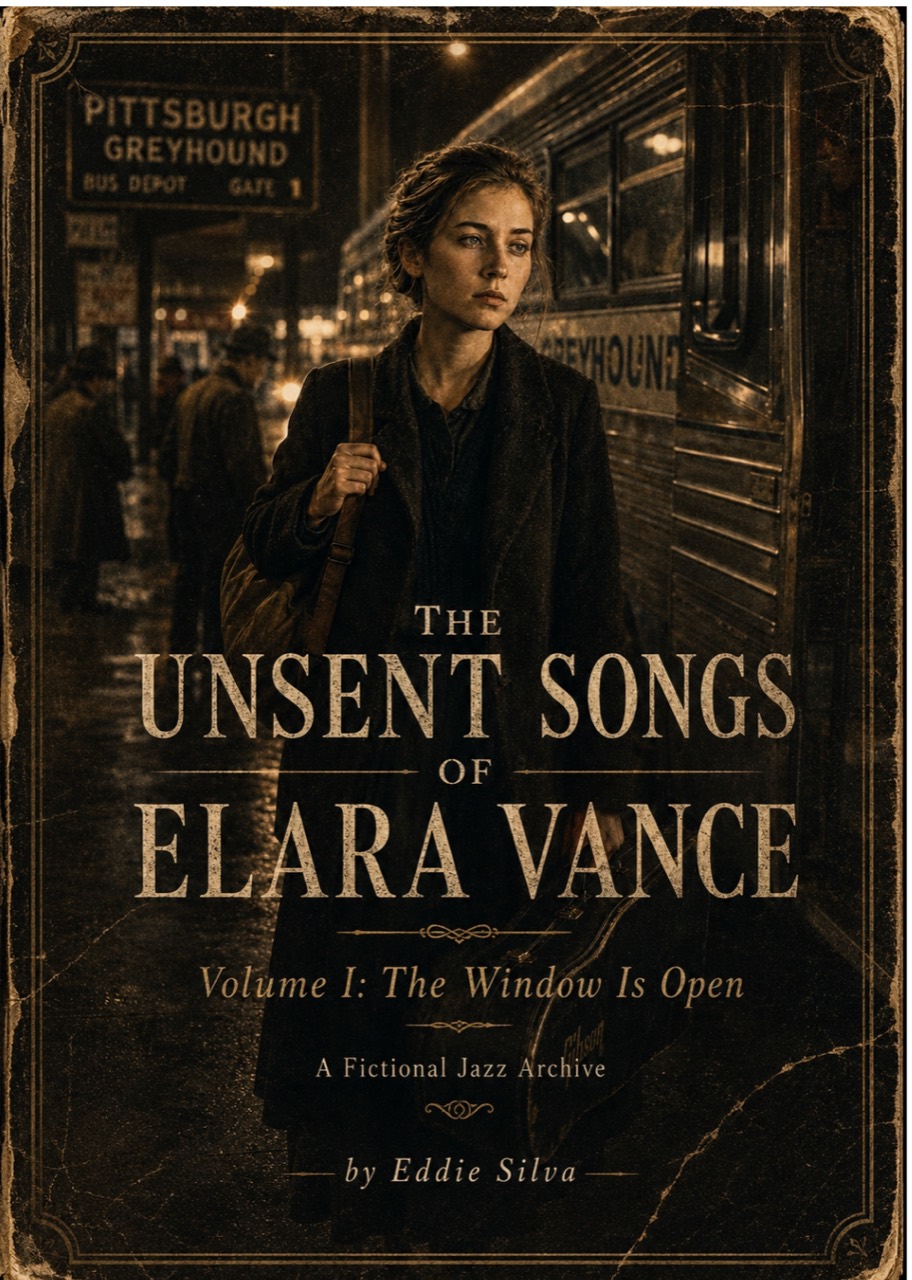
Volume I: The Window Is Open
A dedicated room for the book before launch: notes, images, posters, songs, audio fragments, and the artifacts that belong around the story.
The window opens during launch week.
A home for everything around the book.
Notes, fragments, process entries, and short essays leading into the release.
A place for artwork, character images, promotional graphics, and visual artifacts from the book world.
Jazz, city nights, memory, distance, and the music that belongs near Elara's story.
A future shelf for spoken excerpts, launch messages, and behind-the-scenes audio.
A reserved space for shirts, bookmarks, posters, reader gifts, and small artifacts for fans.
This room is built to hold the world around the book: author notes, fictional documents, sound fragments, visual artifacts, character files, and small archival entries that make Elara Vance feel discovered rather than simply announced.
A fictional jazz archive built around a novel, its songs, its city, and the traces left behind.
Elara is fictional. The archive treats her world with the texture of a recovered music history.
Start with the launch journal, then move into the fictional clippings and listening notes.
Posters, music, audio, reader objects, and a small shelf for artifacts after launch.
A guide to the fictional songs, letters, photographs, clippings, room notes, and emotional evidence surrounding The Unsent Songs of Elara Vance.
Elara began as a voice somewhere in the room. Then she became a daughter, a runaway, and the center of a fictional jazz archive.
Play the recording below as you read. "Copper & Ink" is best heard quietly — like something discovered in a room that has not yet decided whether to forgive.
Play the recording below as you read. "Copper & Ink" is best heard quietly — like something discovered in a room that has not yet decided whether to forgive.
"Copper & Ink" is one of the earliest and most intimate songs associated with Elara Vance and The Signal Room Band.
Before it became a performance, it began as an image: copper, ink, and a heart caught somewhere between the two.
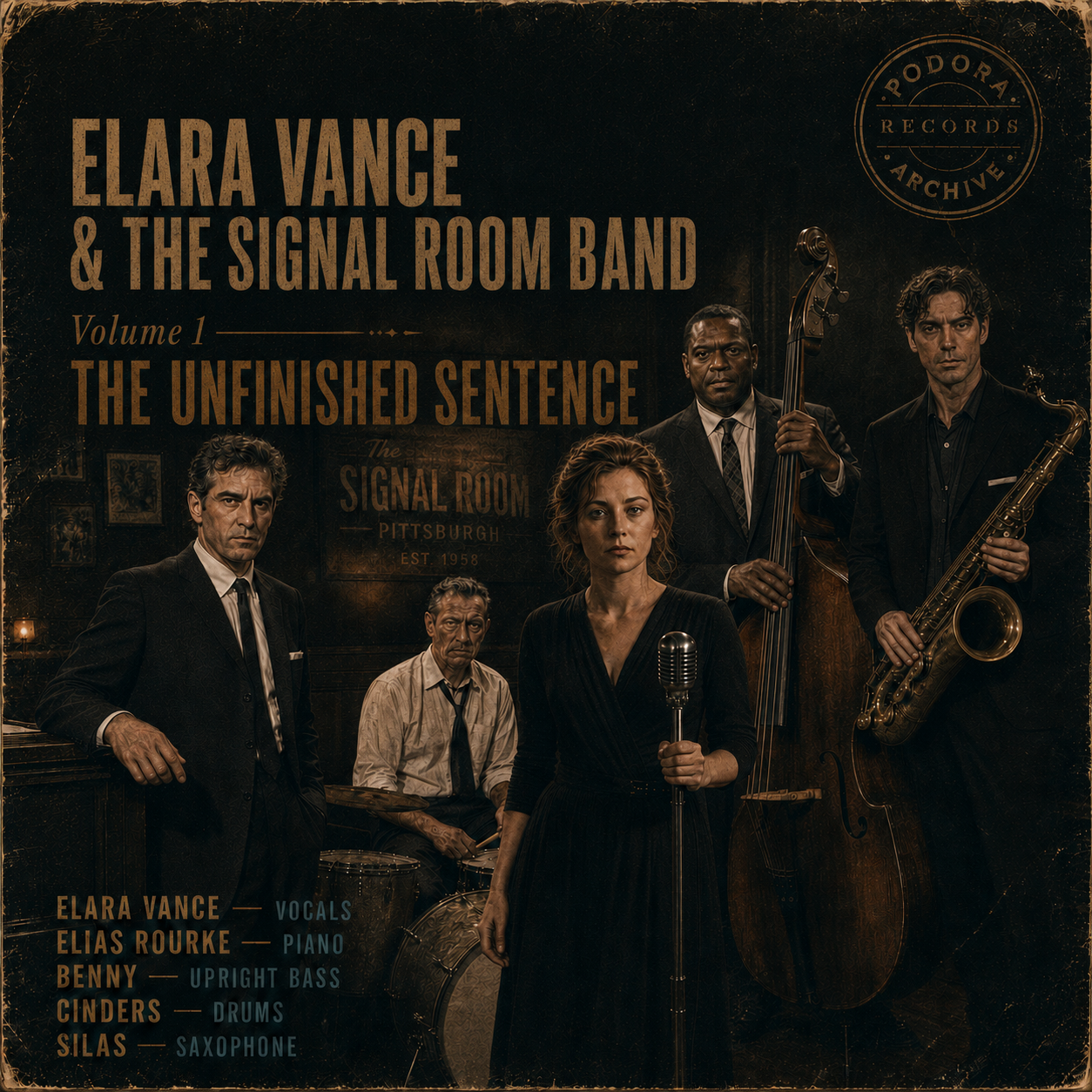
Elara Vance & The Signal Room Band
From the fictional archive The Unsent Songs of Elara Vance
The song carries the feeling of someone trying to explain a wound without naming it too directly. Its language is simple, but not small. Copper suggests touch, memory, old doors, coins, and the taste of fear. Ink suggests everything written — and everything left unwritten.
That tension gives the song its emotional weight.
Musically, "Copper & Ink" belongs to the quiet side of the 1960s jazz tradition. It is not built for spectacle. It is built for a small room, a close microphone, and a listener willing to lean in.
The arrangement should feel restrained and human: piano in low, careful chords; upright bass moving with patience; brushed drums soft enough to sound like rain against glass; and saxophone entering only when silence has said enough.
Nothing in the song should feel polished to perfection. Its power comes from the impression that the singer is discovering the truth while singing it.
"Copper & Ink" is not a grand declaration. It is a private confession placed inside a public room.
That is why it remains one of the defining songs in the Elara Vance archive. It introduces the emotional language that follows her music from then on: memory, restraint, regret, dignity, and the difficult beauty of saying only what the heart can survive.
The song does not explain everything.
It opens a door.
And once that door is open, the listener understands that Elara Vance is not singing to impress the room.
She is singing because silence has become too heavy to carry.
Continue listening through the Elara Vance Archives — one song, one room note, one unfinished sentence at a time.
A portrait of the fictional singer, daughter, runaway, and central voice of The Unsent Songs of Elara Vance.
The fictional Pittsburgh jazz room where Elara Vance is not saved, but finally heard.
The section is prepared to grow one piece at a time: essays before launch, fictional documents, song notes, character files, visual materials, and short archive cards.
Personal notes from the author: why Elara exists, how the archive was built, the proof copy, the release window, and the cost of creating independently.
Newspaper clippings, fictional reviews, venue notices, lost session notes, and documents from the world around The Signal Room.
Song notes, lyrics, recordings, mood pieces, and the way music works inside the novel as confession, memory, and evidence.
Profiles of Elara, the band, Eastport, Pittsburgh, The Signal Room, and the emotional geography behind the story.
Covers, portraits, posters, proof-copy photos, flyers, and design notes from the book's rediscovered-jazz aesthetic.
Small collectible entries for objects and fragments: the envelope, the ticket, the piano, the microphone, the notebook, the unsent letter.
After launch, this room can expand into a small bookshop shelf: posters, bookmarks, shirts, limited items, soundtrack notes, and objects connected to the world of Elara Vance.